
Body Surgery Sydney · Brachioplasty Surgery
Arm Lift Sydney
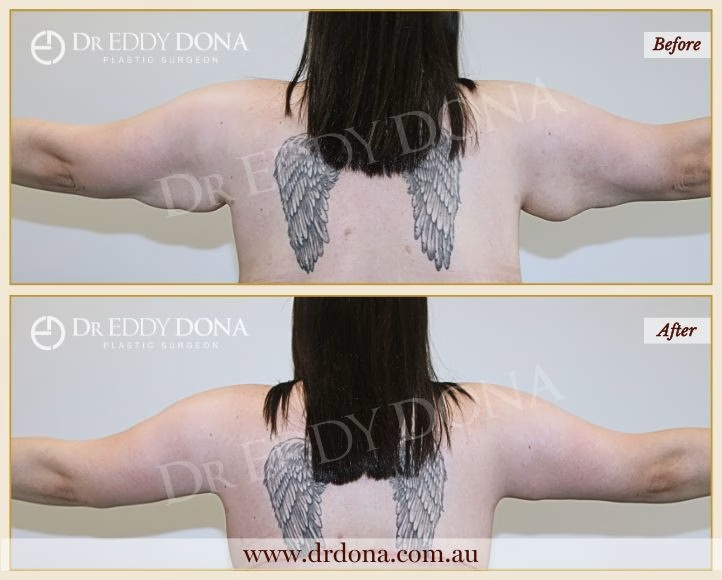
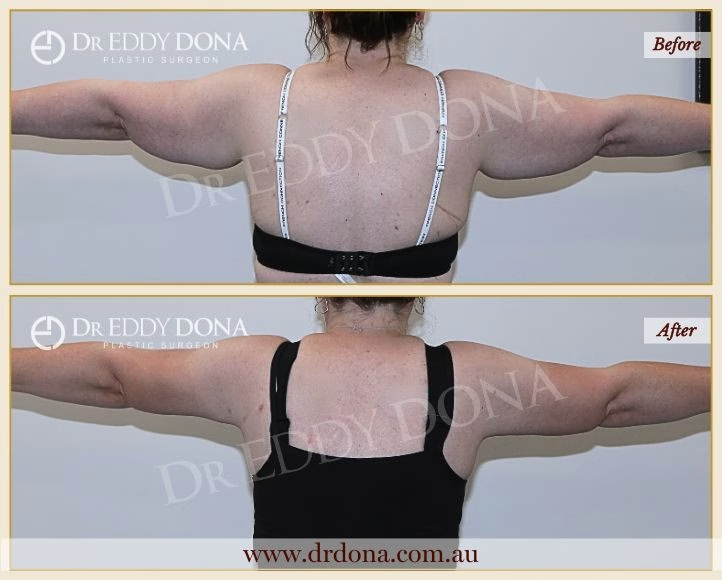
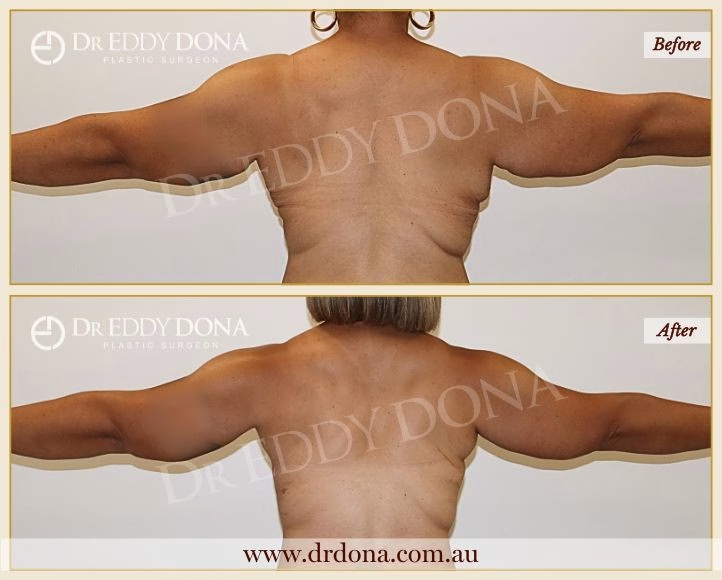
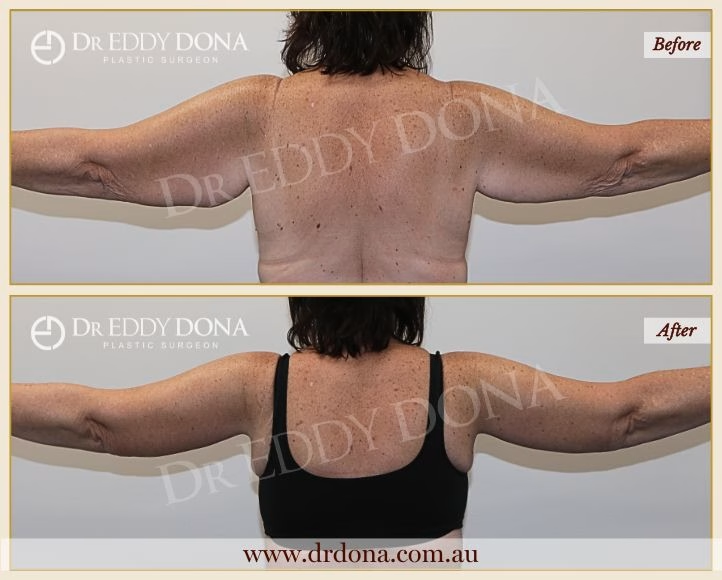
Brachioplasty (Arm Lift Surgery) involves surgically removing excess skin and tissues from the upper arm to address issues with the shape and form of the arm.
Often, patients have lost an excessive amount of weight and are left with excess skin that does not retract around their arms. At other times, natural factors such as genetics and ageing cause the skin to lose elasticity. While exercise can help tone the arm muscles, it doesn’t always result in tightening or the removal of excess skin.
Patient results
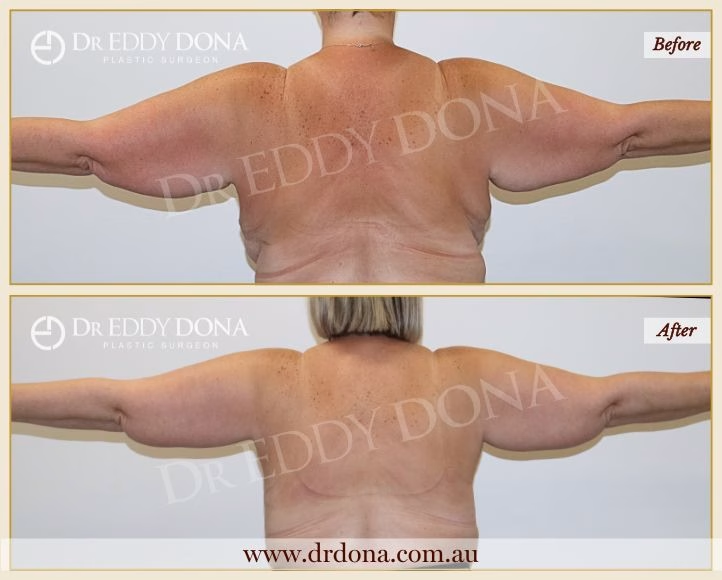
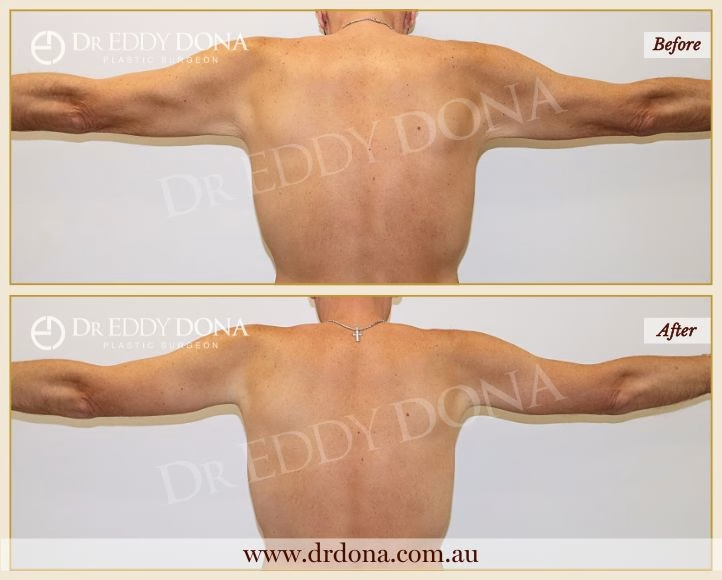
Before & After
The displayed before and after pictures are provided as an educational tool to demonstrate some of the results achievable from plastic surgery. All surgeries on this page are performed by Dr Eddy Dona and are published with the written consent by the patients
View before & after galleryThe surgery
Types of Arm Lift Procedures
A Brachioplasty procedure is performed in a private hospital under general anaesthesia. Depending on the procedure required, your surgery may take between two and four hours. Dr Dona performs several types of Arm Lift procedures, with each tailored to your specific needs. During your Initial Consultation, he’ll advise you on the most appropriate option to address your concerns.
Minimal Scar Arm Lift
Any ‘minimal’ scar surgery can only work when the patient has minimal problems, as it can only provide minimal results!
When considering Arm Lift Surgery, some surgeons offer a surgical technique where the scar is limited to the armpit, promising that this technique will tighten the arm.
However, this is not an optimal solution.
The reasons for this may best be described with a dressmaking analogy.
If you have a baggy shirt sleeve and you only shorten the sleeve, it will still be baggy. Alternatively, a successful alteration will involve running a seam along the length of the arm to remove material and tighten the sleeve for a better fit.
The same basic principle applies to Arm Lift Surgery (as it does to all body contouring surgical procedures).
Traditional Arm Lift (Full Brachioplasty)
A traditional Arm Lift has a scar extending from the elbow to the armpit. Dr Dona prefers to have the scar on the inner aspect of the arm, while some surgeons may place the scar along the back of the arm.
During the procedure, Dr Dona will remove all excess skin and associated fatty tissue. He will then close the wounds using several layers of internal dissolving stitches. The result is a tighter, smoother contour, consistent with the patient’s body composition.
Extended Arm Lift
When patients have experienced excessive weight loss, they are often left with excess skin in many areas of the body.
A common area of concern is the upper outer aspect of the chest (below the armpit region).
To address this concern, the Arm Lift will often extend to this chest region, as well as the outer aspect of the lower breast/chest fold. This procedure is designed to remove all excess skin and tighten the outer chest wall and armpit region so that they are proportionate to the newly tightened arm.
Ideal Candidates for Brachioplasty
Ideal candidates for Brachioplasty typically fall into two categories.
The first category involves patients who have experienced significant weight loss. Although they have lost a considerable amount of fat, the skin on the arms has a limited ability to contract back to its now smaller frame. Instead, the skin remains loose and floppy. And for some individuals, this is a concern.
Other suitable Brachioplasty candidates are those who have lost elasticity in their skin due to ageing, lifestyle or genetics. Over time, the skin begins to sag, and no amount of exercise can help it regain its former shape.
Combining Brachioplasty With Breast Surgery or Other Procedures
When patients have lost an excessive amount of weight, they often find that both their arms and breasts have sagged considerably. Consequently, some patients opt to combine their Brachioplasty with a Breast Lift. An advantage of combining these two surgeries is that the scar from the Arm Lift continues to join the scar from the Breast Lift. This allows Dr Dona to remove the excess skin between the outer breast and armpit, consequently reconstructing the entire region. If you like, you can think of it as a combined Arm and Breast Lift.
Consultation
Your Arm Lift Consultation With Dr Eddy Dona
Your consultation is the first step in discovering whether an Arm Lift is right for you. During this appointment, Dr Dona will:
- Discuss your concerns and goals
- Review your medical history and any previous procedures
- Examine your arms to assess the best options for you
If you are a suitable candidate, Dr Dona will explain the surgical approach, outline the expected recovery and discuss potential risks and complications. Dr Dona will also take the time to answer your questions, so you feel fully informed before making any decisions.
- Fellow of the Royal Australasian College of Surgeons
- Australian Society of Plastic Surgeons
Recovery
Your recovery, step by step
Arm Lift Recovery
What To Expect Immediately After Surgery Your Brachioplasty Procedure
When you wake from surgery, the head of your bed will be elevated. To minimise fluid accumulating in your wounds, drainage tubes will be inserted into each arm. They remain in place for one or two days. You will also be wearing compression garments on your arms. These garments help minimise swelling, reduce tension in the wounds, and aid healing. You’ll have at least one drip in place to give you IV fluids, pain medication and antibiotics. A waterproof dressing will cover your wounds. This will stay in place until you arrive at our clinic for your first heaLED post-op appointment.
Your First Two Days in Hospital
Here’s what you can expect regarding your recovery and wound care during your first two days in hospital.
WOUND CARE:
- Dressings – will cover the scars on your arms. When you are discharged from hospital, you will go straight to your first post-operative appointment. During this appointment, your dressings will be removed and your first LED light therapy treatment will commence.
- Medical tape – will remain on your incisions for the rest of the week after surgery.
- Stitches – are dissolvable, so they do not need to be removed. However, on rare occasions, a stitch can get irritated and may require manual removal by one of our nurses.
- Drains – are usually removed on the second day after surgery, before you leave the hospital. At this time, your catheter and any other IV leads will also be removed.
- Topical cream – During your first post-operative visit, you will be given medical-grade skin care to be applied to your surgical incisions. We do not use silicone strips or any other topical products. Instead, our medical-grade topical cream provides a natural seal of bee’s wax (a binding ingredient in the product), while also sending nutrients deep into the second layer of skin. Medical-grade skin care products also help to accelerate healing and increase the formation of healthy scar tissue.
Recovery & Activities:
- Showering: You’ll be allowed to shower with assistance while in hospital.
- Physiotherapy: If required, a physiotherapist will see you on the first day after surgery. This is so they can help you get out of bed and start to mobilise gently. The sooner you get out of bed after surgery, the better.
- Pain and discomfort: You may feel discomfort, along with shooting pains or a burning sensation. However, these sensations are usually associated with your drains, and the pain typically subsides. Numbness and tingling sensations will also usually diminish. However, in some cases, numbness can persist. This can occur with any scar or surgical site. To help reduce pain and discomfort following surgery, we have developed the HeaLED, which uses light therapy to help minimise inflammation and swelling that contribute to the pain and discomfort after your procedure.
- Bloating and constipation: These are common side effects after surgery, due to your strong pain medications and lack of activity — both of which slow down the bowel. To counteract this, you’ll be given a constipation medication called Movical. You’ll start taking this while in hospital, but you may wish to continue with it for a few days when you return home.
- Discharge medications: Discharge medications are standard for all patients. These typically include pain medication, blood thinners and antibiotics. Please take them as prescribed.
Brachioplasty and Breast Lift (Mastopexy)
Patient education
Dr Dona’s Body Contouring Surgery eBook
Dr Dona’s Body Contouring Surgery Ebook is an excellent educational resource, including – Patient case studies
Questions
Dr Dona answers your questions
Am I a suitable candidate for Brachioplasty Surgery?
A suitable candidate for Brachioplasty Surgery is typically someone who has undergone significant weight loss and is left with excess sagging skin that hangs off their arms.
Suitable candidates should also be in good mental and physical health, understand the potential risks and complications of surgery and have realistic expectations regarding their surgical outcomes.
Will I be in pain after my procedure?
Everyone has a different experience with pain after surgery, from mild to significant discomfort. You may experience localised pain at your incision sites, but also nerve pain (shooting pains and burning). However, your specialist anaesthetist will take good care of all your pain concerns.
As well as providing the anaesthesia for your surgery, they’ll give you pain medications to take during your hospital stay, along with medications to take home with you.
Additionally, once you’ve returned home from hospital, you’ll regularly attend the clinic for a comprehensive post-operative care program, which will include LED light therapy. This treatment not only accelerates healing but also helps to minimise pain.
When will I get my post-operative plan?
Before your procedure, you’ll be given a detailed post-operative plan. This involves multiple weekly in-clinic post-operative care visits with our nursing team that continue for several weeks. This plan enables our nursing team and Dr Dona to monitor your progress, initiate post-operative treatments and wound care, and ensure you achieve all the necessary recovery milestones.
How many days do I stay in hospital after a Brachioplasty?
Occasionally, depending on the Arm Lift procedure, some patients have surgery performed in a day surgery facility. However, most patients spend at least one night in a private hospital before they are medically fit to return home. Other patients may benefit from another day or two in hospital.
Can I walk around when I return home from my surgery?
When you return home, you’ll be encouraged to get up and be as mobile as possible. However, it’s vital that you listen to your body and only move around to the extent that you’re comfortable with.
How much swelling can I expect after my surgery?
Immediately after your surgery, you’ll be placed in a compression garment. This helps manage your swelling and encourages healing. You must wear your compression garment for at least four weeks. Your arms—and particularly your hands–will be quite swollen after surgery. You can expect to see a significant reduction in swelling within the first two weeks following your surgery. Additionally, it’s not unusual to see a slight difference in swelling from one side to the other. Swelling will also be reduced by your LED Light Therapy sessions (as part of your Post-Operative Care Plan).
How should I sleep after surgery?
There’s no set sleeping position that’s advised following your surgery. You can sleep in any position that you’re most comfortable in. However, you may find that sleeping on your back is the most comfortable for the first few weeks.
When can I start driving after a Brachioplasty?
You should not consider driving for the first two weeks after surgery. After this time, you should only drive if you feel safe enough to do so.
When can I expose my incisions to water after surgery?
Please refrain from bathing or swimming for at least three weeks following your surgery.
When can I go back to work?
After approximately two weeks post-surgery, you can consider returning to light office or desk work. After four weeks, light hospitality work may be possible. Any work that involves heavy lifting or straining must be avoided for six weeks.
When can I return to exercise?
Four weeks after your surgery, you can gradually return to your usual gym training and physical activities. Think of the first four weeks after your surgery as recovery. After this time, consider all activities as rehabilitation. You can participate in any physical activities you’d like, but be guided by your comfort levels and strength, which will improve gradually over time.
When can I expect to see the final results of my surgery?
It will take at least six months before you’re feeling ‘normal’ and able to do all the things you could before surgery. At this stage, we’ll also assess your final surgical results. However, be aware that your scars may take up to 24 months to mature.
Will Medicare Or Health Insurance Cover Arm Lift (Brachioplasty) Surgery Costs?
Brachioplasty is an elective surgical procedure. In patients experiencing significant amounts of excess skin, Brachioplasty surgery may be partially covered by Medicare and your health insurance. Dr Eddy Dona will advise whether this applies to you during your initial consultation.
How much does an Arm Lift cost?
The cost of an Arm Lift, also known as Brachioplasty, can vary greatly based on several important factors. Key variables include:
- Anaesthetist fees
- The specific type of Arm Lift procedure – complexity and duration of surgery
- Hospital fees
- Private Health Insurance status and whether it applies to you
Given the personalised nature of Arm Lift Surgery, and the many listed variables, it is impossible to provide a precise total out of pocket cost. However, after your initial consultation with Dr Dona you will have:
- A tailored surgical plan
- Confirmation of private hospital and overnight stay if required
- Confirmation of Private Health Insurance coverage if available
You will then be provided with a precise quote, including all your Post-Operative Care requirements.
Potential Complications
Every surgical procedure carries potential risks and complications. It’s important to be aware of these before making any decisions about surgery.
Complications specifically relating to Brachioplasty include:
- Asymmetry – A size difference in the arms, or unevenness of the skin
- Swelling – Swelling is normal. However, in some cases, the swelling may take several months to subside.
- Loss of sensation – You may experience a loss of sensation surrounding the scars on the upper arm or forearm. This typically subsides over several months.
- Scars – Scars may appear to be worse during the first six months of healing. Unfortunately, it is not uncommon for Brachioplasty scars to become quite thick and dark. However, LED light therapy treatments, included in your post-operative care plan helps to minimise this type of scarring.
- Circulation – Circulation may be poor in some areas of the skin around the surgical site. This may lead to a loss of skin and a wound that needs to be dressed until healed.
- Seromas – A seroma is where fluid builds up under the wound. If this occurs, it may need to be drained with a needle.
- An important note on scarring…
In most parts of the body, a mature scar (that has healed well) appears as a fine white line. With Brachioplasty, the opposite is true. For various reasons, instead of becoming thin over time, Brachioplasty scars usually become thick and wide. Further, they can often develop into hypertrophic scarring (raised and thick, but within the boundaries of the original wound) or keloid scarring (raised and thick, extending beyond the original wound site).
To help prevent thickened or widened scars, all patients are given a comprehensive post-operative care program to help accelerate wound healing and minimise the appearance of scars. This includes the use of LED Light Therapy, Rejuran Therapy and Synchro Cream.
Patient resources
Related articles
Surgical & non-surgical procedures
Request a consultation
1300 DR DONA (1300 373 662)(02) 8805 7600
Suite 413, 29-31 Lexington Drive, Bella Vista NSW 2153
Monday to Wednesday 9:00am to 4:30pm
Thursday to Friday 9:00am to 6:00pm